How Nature Created One of the World's Greatest Marine Diamond Provinces
The story of marine diamonds began millions of years before the first diver entered the water. It began with geology, rivers, erosion and the relentless forces of nature. Understanding how these deposits were created is fundamental to understanding why GAMECHANGER has been conceived as a new generation of precision underwater recovery technology.
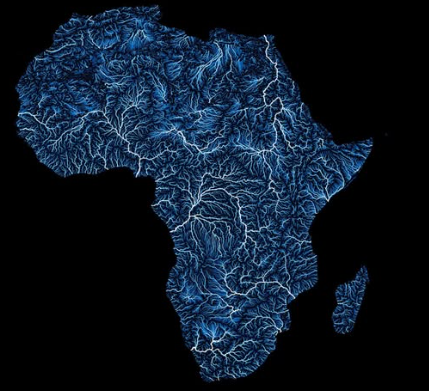
Every River Writes a Geological Story
For hundreds of millions of years, rivers have shaped the Earth's surface through erosion, transporting rock, gravel and heavy minerals from mountains to the sea. Depending on the geology of their catchments, some rivers have carried diamonds, gold and other dense minerals, depositing them along riverbeds, floodplains, estuaries and offshore marine environments.These natural processes have created some of the world's richest alluvial mineral deposits.
Nature has spent millions of years concentrating these resources.
Understanding that process is the first step towards recovering them responsibly.
THE ORANGE RIVER MEGAPLACER
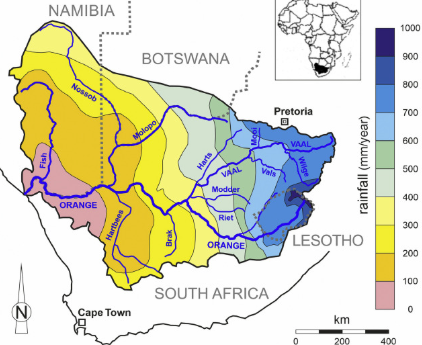
One River. Millions of Years. One Extraordinary Geological Legacy.
The Orange River is one of Africa's great geological transport systems
.For millions of years it has carried enormous volumes of sediment from Southern Africa's interior towards the Atlantic Ocean. As the river and its tributaries eroded ancient rock formations, they transported diamonds released from kimberlite sources together with countless tonnes of gravel, sand and other heavy minerals
.Along the way, these materials were naturally sorted and concentrated according to size, density and hydraulic conditions
.This geological process ultimately created one of the world's richest marine diamond provinces extending from the Orange River mouth along the west coasts of South Africa and Namibia.
Nature created the deposit. Human ingenuity determines how responsibly and efficiently it can be recovered.
WHY THE RESOURCE CONTINUES OFFSHORE
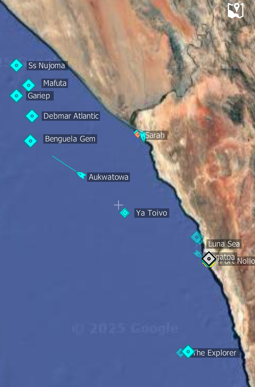
The Story Does Not End at the Coastline
The Orange River has been delivering sediments to the Atlantic Ocean for millions of years. However, the river mouth itself is only one stage in a much larger geological process.
Changing sea levels, tectonic uplift, powerful Atlantic wave action and the northward movement of the Benguela Current have continually reworked these sediments. Ancient beaches became submerged. River channels shifted. New gravel terraces formed while older deposits were buried beneath marine sands.
As a result, diamond-bearing gravels today extend far beyond the shoreline into the offshore marine environment of both South Africa and Namibia.
This geological evolution has created one of the world's most valuable marine diamond provinces.
The coastline marks the beginning of the marine deposit—not the end of it.
Nature Never Stops Working
The seabed is constantly changing.
Sand moves.
Gravel moves.
Storms reshape the seabed.
Currents uncover some deposits while burying others beneath new layers of sediment.
Understanding these natural processes has been one of the most valuable lessons of my career.
For more than forty years I have worked directly on these seabeds. I have seen productive gravels exposed by storms and hidden again beneath moving sand. I have watched currents reshape the seabed and learned that successful recovery depends not only on finding diamonds, but on understanding the natural forces that continue to concentrate and redistribute them.
The seabed is a living geological system. Those who understand how it changes are best placed to recover its resources responsibly.